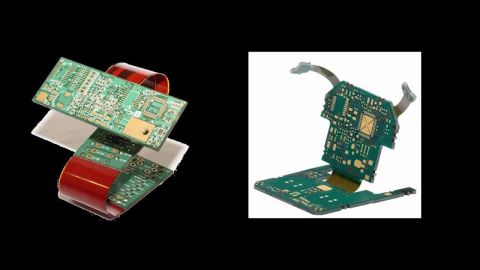
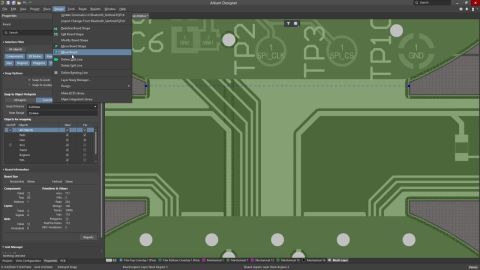
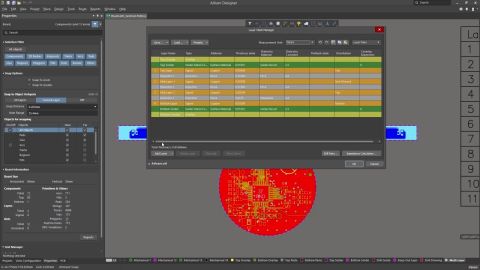


Altium's MCAD CoDesigner technology connects the mechanical and electrical design domains, allowing the mechanical and electronic engineers to pass the loaded PCB back and forth between the two domains. In your Altium design software, this is achieved through an extension that loads and extracts board and component data from the PCB editor, the MCAD CoDesigner extension. In the MCAD software the…
The content of this page is available only for Altium Designer version 20.0 and above. To select a version of the software, use the version selector at the top of the page.
Perhaps the single thing you can do to become more productive in any software environment is to learn the shortcut keys. Keystrokes are more efficient than carefully positioning a mouse over a button or drilling through menus, and once learned become second nature. This page gathers together the default shortcuts that are available across the various design domains within Altium Designer…
Installation of any software application should be straightforward, intuitive and, perhaps above all, fast. Furthermore, when you have that software installed, you want to be able to update it as and when you deem necessary, and in a streamlined fashion. Altium Designer provides a fast, efficient Installation Management System that caters for this very need - a system that not only expedites the…
Parent page: Creating a New Component Before saving a Workspace Library component defined/edited in the Component Editor (in its Single Component Editing or Batch Component Editing mode) to the connected Workspace and making the component be available for use in designs, it is essential to make sure that this component meets the requirements in accordance with the configured settings. When you…
This article is a reference guide to the Object Type Checks category of query keywords available in schematic and schematic library documents in Altium Designer. It shows what each keyword returns, how the syntax is written, and simple examples for using True, False, and Not conditions to include or exclude specific object types. It also points out a few notes such as aliases and deprecated…
This article serves as a reference guide to the Membership Checks category of query language keywords available in schematic and schematic library documents in Altium Designer, showing what each keyword does, how it is written, and example queries for using it in practice. It covers unit conversion keywords such as AsCM, AsDXPs, AsInches, AsMetres, AsMils, and AsMM, along with model and footprint…
Board level annotation in Altium Designer lets you control how compiled components are named from within the Schematic editor, making it especially useful for multi-channel projects and designs that use device sheets. This article explains what board level annotation does, how it helps resolve duplicate designators without changing original device sheets, where annotation settings are stored, and…
This article explains how to create, find, place, organize, edit, and manage snippets in Altium Designer using the Design Reuse panel. It covers both Workspace and local snippets, shows how snippets can capture schematic or PCB circuitry for reuse, and outlines the key actions available for maintaining them, including folder organization, revision-related details, and management options for…
This article explains how to use the Design Reuse panel in Altium Designer to create, manage, search for, place, edit, and organize formal reuse blocks stored in a connected Workspace. It outlines how reuse blocks can include both schematic and PCB data, and how those PCB elements are transferred into a board through the ECO process. It also walks through key panel actions such as browsing…
Learn More