










Modular Layout and Design vs. Hardware Cloning


Modular layout for Lapka’s Project Ara
From enterprise software to signal processing, modular design is now the norm for many advanced product design and analysis tasks. Modular hardware design leverages several independent modules to create a unique, customizable system. In the hardware ecosystem, a modular design for an embedded board involves laying out modules with their own well-defined connections and functions. This typically starts with a microcontroller or processor module, followed by populating an embedded system with other modules that provide the desired functionality.
The modular hardware approach provides an ecosystem where system developers can easily pick any module of choice (e.g., sensor, wireless, display, power management interfaces), stack them together, and produce a ready-to-use embedded system. Because of their modularity, these independent platforms tend to be robust enough that different platforms can be used interchangeably.
An alternative process is known as hardware cloning, in which an open-source design is imported into a design tool and customized. Components can be swapped and upgraded, new components can be added to the board, and the entire layout can be changed to meet the designer’s needs. With this in mind, how does the modular layout process compare to hardware cloning? Let’s look at these two processes in greater depth.
The Dark Side of Hardware Cloning
The terms “hardware cloning” and “electronics cloning” generally refer to the process of making identical copies of an existing electronics products. In the open-source ecosystem, people often release designs with the intent that they can be modified by another intrepid developer as long as attribution is given to the original creator. At the enterprise level, hardware cloning usually refers to the process of copying an existing embedded board design and replicating it for one’s own use and sale without attribution or permission.
The open-source approach advocated by the hardware community has helped in fostering hardware clones. Although the general motive for turning a hardware board open-source is to encourage more individuals to improve the board or fork the design for their own purposes, some people have capitalized on the opportunity to release counterfeits that mimic the original board with the hope of monetary gain. Arduino boards are one prominent example; if you search for Arduino distributors, you’ll be able to find a number of overseas distributors that sell these cloned boards with impunity.
That being said, hardware cloning and modular layout are two viable routes for creating a customized product from existing platforms. Each route requires different skills and experience, particularly at the PCB design level.
The Hardware Cloning Process vs. Modular Layout
Hardware cloning is usually performed by starting from an open-source design, where the schematic and layout files are imported into a standard PCB design tool. Creating a custom board from an existing schematic or reverse engineering a schematic requires careful analysis of the original board, followed by devising your own design changes and component upgrades. A designer with PCB layout experience will spend the majority of their time on these first two tasks, especially when the design for that product is not readily available.
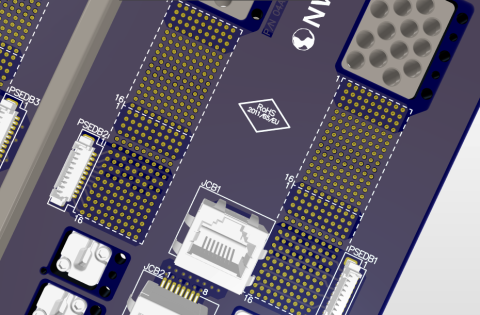
Try reverse engineering and cloning this type of system with traditional PCB design tools.
An engineer that does not have significant PCB design experience may have a very difficult time cloning and customizing a new hardware product. Cloning and customizing requires rebuilding a PCB layout after determining the design changes needed. Inexperienced designers may make some mistakes that are difficult to diagnose without the right design tools, and they may not realize they have a non-functional board until they order a prototyping run.
Using the right modular hardware design tools alleviates the need to redesign proven hardware and allows developers to focus on designing their system’s functionality. Taking a modular design approach allows a developer to mix and match the components they need to provide their desired functionality, ultimately reducing development time for these types of systems. Rather than adapting a traditional PCB design tool to modular hardware design, using the right design tools with built-in electrical and mechanical models for computing modules allows anyone to create high quality embedded systems quickly and easily.
Modular Layout and Design with Upverter
Upverter (previously known as Geppetto) is an online platform that allows you to design your board and then order the production-ready board within a few days. This industrial platform is ideal for building embedded solutions from fully functional COMs and modules. Because the electrical connections between different COMs are already defined for the user, this allows novice and experienced developers to create an embedded board in a fraction of the time required to clone an existing product.
Unlike conventional EDA tools, Upverter doesn’t force you to make a traditional schematic, where you connect resistors, capacitors, and integrated circuits into a complete diagram. Instead, it leverages existing modules with well-defined electrical connections. You can focus on your boards form and functionality, rather than forcing you into the finer aspects of PCB design. Upverter also notifies you of connection errors, overlapping modules, and open connections in a graphical browser-based interface, allowing you to easily make corrections to your layout.
Modular layout for the Gumstix Pi Compute Dev Board in Upverter
The modular design approach is not new, and neither is cloning, but the modular approach has been heavily adopted by the engineering community, and modular layout is becoming a driver for significant innovation in the embedded systems industry. The modular design tools in Upverter allow designers with any level of experience to create customized, fully modular single-board computers from a broad range of standard COMs. All these tools are available in a browser-based design interface that allows you to create fully functional modular hardware systems and quickly plan for production.
Take a look at some Gumstix customer success stories or contact us today to learn more about our products, design tools, and services.

关于作者
相关资源
目录
Solutions for Every Role and Team
- Discover and evaluate design options earlier
- Develop in one shared workspace
- Scale with control and compliance
- Connect every stage of hardware development
Learn More
Thank you, you are now subscribed to updates.






 沪公网安备 31010502006411号