










What Is BOM Management? A Practical Guide to Avoiding Costly Part Mismatches

At a Glance
Streamline BOM management. Discover how real-time data, collaboration, and automation simplify procurement, reduce risks, and enhance PCB design efficiency.


Every electronic product requires a bill of materials (BOM) before manufacturing. The BOM includes information about the parts used in fabrication and assembly. While initially from your EDA software, a BOM becomes a critical living document connecting design, procurement, and manufacturing throughout the product lifecycle. It guides part selection, procurement, and supply chain management from design through production. Many types and formats exist, but all BOMs guide procurement and assembly.
This BOM management guide dives deep into everything hardware engineers need to master the creation and management of BOMs, starting from the fundamentals to advanced strategies for managing complex, dynamic supply chains. The BOM for a new product is the starting place for controlling cost, streamlining procurement, and maintaining the designer’s intent for manufacturing; as such, it needs to be monitored and managed throughout a product’s lifecycle. This guide will give design engineers an overview of how successful design teams manage their BOMs, as well as how these processes impact procurement and product lifecycle management.
What Is BOM Management?
BOM management is the systematic process of controlling, tracking, and maintaining Bills of Materials throughout a product’s lifecycle. At its core, BOM management is the foundation for electronic product data control. It maintains critical component information, including manufacturer part numbers (MPNs), supplier part numbers (SPNs), parametric data, and compliance status.
A critical component of BOM management is BOM analysis: the systematic evaluation of component data to identify risks and opportunities. This includes monitoring lifecycle statuses (active, NRND, obsolete), analyzing costs and lead times across suppliers, verifying compliance with standards like RoHS and REACH, and identifying opportunities for component consolidation. Modern BOM management software integrates with supplier databases to provide up-to-date data on availability, pricing, and alternative parts and can automatically perform BOM analysis to flag issues like end-of-life notifications, compliance problems, and supply chain constraints before they impact production.
Why BOM Management Matters
Design teams can use real-time data visibility when planning purchases, managing production orders, and monitoring lifecycles of critical electronic components. Modern cloud BOM management software enables a level of BOM automation that was not possible only a few years ago, and it is driving new levels of productivity within design and procurement teams.
Cost Impact
According to a study by Forrester, engineers can spend up to 159 hours per year performing administrative tasks, which mostly includes tasks related to procurement and BOM management. These tasks are not something engineers tend to find enjoyable, yet they cannot be delegated. Engineering input is required to ensure that the product is built to specification.
Furthermore, the Forrester study found that 80% of designs require part replacements, resulting in an additional average* of 40 hours of time spent sourcing these parts. This equates to 2.8 PCB re-spins at an average of $46,000 per re-spin. These manual tasks continue to slow companies' time to market and tax their revenue streams.
Risk Management
All electronic products come with supply chain risk, but a BOM management platform and process can mitigate problems related to supply chain risk. A product’s health can be compromised in a variety of ways:
- Parts can go out of stock or become obsolete
- Supply chain disruptions can impact purchasing and production
- Compliance requirements (RoHS, REACH, industry standards, etc.) can change
- Quality control problems may require design changes
Companies manage these risks better when they leverage BOM software to see all the required supply chain and procurement data directly inside the BOM and they can link that data to schematics and designs.
Market Pressures
Market pressures also demand creative and precise BOM management processes. In particular, accelerated development cycles and design-to-cost pressures drive the need for real-time supply chain data visibility, specifically data related to prices and inventories held by global distributors. In an environment where globalized production creates global supply chain challenges, design teams need BOM management tools that help them optimize costs across their supply chain and product portfolio as they plan to scale up production.
Main BOM Management Challenges
Although EDA software and product data management (PDM) platforms have changed to handle the growing complexity of managing electronic parts supply chains, BOM management technologies have not. Design teams still need to:
- Maintain BOM accuracy across multiple revisions
- Synchronize BOM data between departments and tools
- Manage part alternatives and substitutes
- Enforce version control and track changes of product data
Supply Chain Blindness Creates Inaccurate BOMs
Even great teams that attempt to manually enter data into their master BOM document are going to make mistakes. Of course, someone can update supplier information in the part library, but this is much more time-consuming and requires updates to the design data before re-exporting a BOM. Manual fixes become cost-prohibitive when a company has to maintain many BOMs across many products and versions. Inaccurate and outdated BOMs cause challenges that impact a design team or procurement department’s velocity as they plan production and execute purchases. Some of these challenges include:
- Incomplete part inventory and pricing data
- Delayed part obsolescence notifications
- Uncertain lead times for parts used in production
- Inconsistent part data from different suppliers
When teams manage BOMs in Excel sheets, design and procurement will never know if the supplier or lifecycle information continues to be accurate. This is why BOM management tools must always be connected digitally to the highest quality part data repositories for technical data and lifecycle statuses.
Data Quality and Integration
A digital link to the supply chain with real-time data provides this information directly inside the company’s BOM software, eliminating the need for teams to toggle between multiple apps or web pages. Altium products also bridge communication gaps between teams. Manual data entry only occurs when a part is created in a library; all future supply chain updates are automatically fed into the BOM and parts libraries. By eliminating so many manual tasks, teams can transform their PCB BOM management processes and spend more time focused on designing competitive products.
Best Practices for BOM Management
What should design teams do as part of their BOM management process? BOM management should be part of a product lifecycle management process that specifically focuses on part and supplier information as it relates to manufacturing electronics assemblies. Teams will need to periodically review and update BOMs based on lifecycle changes, inventory changes, and design revisions. A BOM management tool that pulls data from the supply chain and links directly to libraries and projects streamlines the maintenance of accurate BOM data.
Within a BOM management process, a team should attempt to reach these goals:
Consistent Library Structure
- Maintain a consistent part numbering system for library parts
- Define required parameter fields for library parts
- Enforce review and revision control procedures
- Assign one team member to oversee part release approval
Process Management
- Involve procurement teams early in the design process
- Perform regular BOM reviews for each project
- Implement change management procedures
- Roll out a new part creation and review process
Software Integrations
- Provide part database links
- Display supply chain data in library parts
Data Integration Best Practices
- Link the latest data from the preferred supplier directly to library parts
- Standardize on a single database and management solution
- Establish regular data validation and cleanup policies
- Follow multi-source data verification strategies
Engineering teams are responsible for developing processes to achieve these goals. Design, procurement, and data management tasks are all linked together through a company’s EDA platform and tools.When this is done correctly, design teams see the supply chain data they need inside their PCB design software, BOM management tool, and parts libraries. This makes BOM management faster, more automated, and more accurate.
BOM Management Tools
Given all the data and part management tasks required to maintain electronic products, PCB designers and procurement professionals need a BOM management software that complements their company’s design process and streamlines management tasks. Instead of using third-party software or trying to use an ERP system, use a platform that integrates directly with your EDA software. This ensures users have access to the supply chain data they need, integrated within a collaboration solution for electronics design.
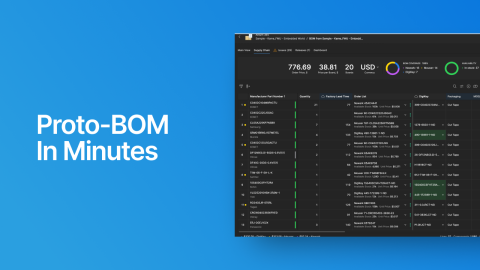
The BOM Management in Altium Develop combines PCB BOM management with integrated supply chain data. BOM Management allows users to upload a BOM or create the BOM directly from the PCB project. The system automatically pulls supply chain data into the BOM. Instead of searching for this information manually, users see current supply chain data within their work environment. They know that the following will be accurate and available for important project decisions:
- Pricing and inventory information
- Lifecycle status for each line item
- REACH/RoHS compliance confirmation
- Suggested alternate part numbers
- Data can be aggregated from preferred suppliers
- Group-level and user-level access control
- Change tracking and version control for each BOM
All supply chain data is supplied by industry-leading data aggregators like Octopart or IHS Markit, ensuring designers have up-to-date, accurate information in real time.
Whether you need to build reliable power electronics or advanced digital systems, use Altium’s complete set of PCB design features and world-class CAD tools. Altium Develop provides the world’s premier electronic product development platform, complete with the industry’s best PCB design tools and cross-disciplinary collaboration features for advanced design teams. Experience Altium Develop today!

关于作者
Related Technical Documentation
相关资源
目录
- What Is BOM Management?
- Why BOM Management Matters
- Cost Impact
- Risk Management
- Market Pressures
- Main BOM Management Challenges
- Supply Chain Blindness Creates Inaccurate BOMs
- Data Quality and Integration
- Best Practices for BOM Management
- Consistent Library Structure
- Process Management
- Software Integrations
- Data Integration Best Practices
- BOM Management Tools
Solutions for Every Role and Team
- Discover and evaluate design options earlier
- Develop in one shared workspace
- Scale with control and compliance
- Connect every stage of hardware development
Learn More
Thank you, you are now subscribed to updates.



 沪公网安备 31010502006411号