






Component Parameters Describe Features of a Part


Component parameters define features of electronic parts necessary to meet form, fit, and function within the design for use across the enterprise.
ALTIUM DESIGNER
No matter the model, attributes, or values - input component properties with smart PCB design software.

Component parameters describe features of a part
PCB Component parameters are simply text strings in EDA software that describe characteristics. Characteristics such as name, value, description, manufacturer, and mounting technology. Any information found on a component datasheet may be represented in software tooling using a text string. Tying that text string to a component collects, and stores, information into one part. That text string, then, belongs to, and moves, with the part throughout the process. When editing the object with the default dialog box method, the user updated values or function will remain with that element so long as it remains a part of the design file.
Each piece of information about a component is called a parameter. A parameter has a name and a value. Parameters are used to link unique information about a part to its stored location. With parameters, information about a part remains with the component in the library. Storage in the library means access to comprehensive information when accessing that part anywhere within the PCB design environment.
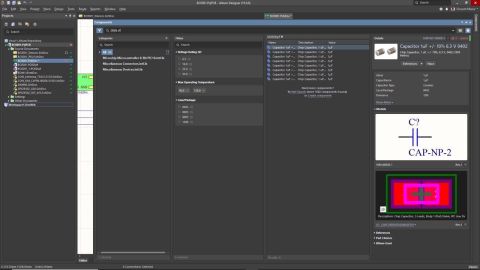
Altium Designer makes it easy to add, and store, characteristic information about components as a parameter value. Easily accessible within Schematic, and Schematic Library, Editors is the Properties Panel. The Properties Panel collects extensive information about the part and allows access to the Parameters tab, a menu that allows adding or editing information about the part. This information is saved and ported to all documentation within the design including the Printed Circuit Boards and Bill of Materials.
Read on to discover component attributes and their value in PCB design software.
Electronic PCB Components and Their Characteristics
There are millions of electronic components available on the world market. Defining and categorizing those multitudes is no small task. Broad categories exist but details distinguishing each take study of datasheets, along with use to further design requirements. Design requirements can be targeted for electronic purposing or for manufacturing impacts. Having vast information about one part can leave designers navigating various databases to research applicability for choice in a particular design. There is a need for elegant cataloging of comprehensive details in one place.

General parameters in the Properties Panel
Important Details About Components Originates in Altium Datasheets
When trying to find the right component for your design, don’t turn to any old list - make sure you consult data that is organized systematically and in an easy-to-understand manner. Have default value and passing parameters in mind, account for variables, and choose design software that has global configuration capabilities beyond the simple default button you might press to get information anywhere.
Distinguishing components from others starts with defining descriptors found in datasheets. Datasheets uniquely define each electronic component, allowing designers the ability to hone in on accurate information necessary to meet design constraints. Now move that information into software, and the challenge becomes organizing those details for productive use. Not only organizing the details but allowing intuitive access for multiple users.
- See how using updated parts moves your process into the future.
Consider how Old Software Doesn’t Need a Leash for New Supplier Parts Updating
- Consider researching component databases that are elegantly linked.
PCB Component Data Management Resolved With Connected Component Applications
- Link comprehensive part information into one place.
Choose Unified Symbols for Your PCB Prototype Design Documents
Read on to take a look at the arrival of EDA software component databases for cataloging parts and their distinguishing features.
EDA Software Defines Component Features with Parameters
Component features are numerous, enumerated within each part’s datasheet. Porting features from datasheets into EDA software has been an evolution. Evolving organization of data has been difficult given the multiple dedicated uses of each and every part’s role within the PCBA development process. Early in the evolution, separate databases were kept to avoid edit confusion amongst departments’ use of specific features of a part. Circuit designers needed electrical properties, layout designers needed dimensional properties, and supply chain needed costing information. Separate databases ensured a lack of confusion, but separate databases enabled dysfunctional management of parts.
Parameters are Distinguishing Features that Uniquely Define Components
Having multiple-use information in one place required software that could organize, intuitively, for multiple user needs. Many times, user needs for one part are in conflict, necessitating elegant organization within the EDA tooling. Anticipating user needs resulted in difficulties as EDA software evolved to change complicated organization needs into elegant menu selections. It’s been a circus but the industry is finally seeing glimpses of high-level usability. And that high-level usability is the result of easily accessed, and editable PCB component parameters. Parameters collect and store information about components that may be accessed intelligently by competing departments.
- Investigate the origin of component parameters with library management.
- Use component parameters effectively within a worldwide database.
Stay organized with Altium Bill of Materials: Keep It Simple With ActiveBOM
- Collecting parameters in one place reduces waste and keep costs in check
Read on to discover how Altium Designer removes the chaff and unifies parameters into one feature-rich component.

Parameters menu defines name and value of each component feature
Altium Designer Properties Panel Defines PCB Component Parameters
Altium Designer has crafted an elegant method for collecting, accessing, and adding component object type and features within their dedicated default Parameters Menu dialog box. The Parameters Menu is found under its respective tab within the Properties Panel. The Properties Panel is accessed when in either the Schematic Capture or the Schematic Library Editors. This is where component parameters such as name, value, vendor, footprint, description, and more can be found or added. Icons for displaying or locking each parameter are easily selected alongside the name and value of each parameter, making it easy to use the respective parameter as needed to detail your design to others.
Defining Component Parameters Allows Display of Unique Features
Altium Designer stores component information in one place throughout the EDA toolset. There is no longer a need to keep separate ad hoc PCB libraries where information can change without rippling through the document set or file. Instead, Altium provides access in the Schematic, or Schematic Library, Editors where all features are stored in parameters. Parameters include a name and a value, and parameters are inclusive. Inclusive means that electrical parameters, dimensional parameters, and supply chain parameters are stored and edited from one place. Once created, or edited, those changes propagate through the entire document set, so all departments within the enterprise have real-time updates.
- Deliver the value of PCB component parameters for PCBA development.
Watch our video of Component Parameters in Footprints - Features
- Discover invaluable information for using component parameters
Watch our video that details parameters within the Components Panel
- Study up on best practices for professional EDA library management
Sit in for an on-demand webinar teaching Professional Library Management
Get on board with the future in component parameter management, including intuitive menus, dialog boxes, and object function defaults for easy access to complex information. Altium Designer provides structure to their PCB component parameters and stores the information in one location, with many access points. Having multiple access points allows enterprise partners and users the ability to find and store data, objects, function, and values that are relevant to other partners throughout the design and development process. Altium Designer provides component parameter management within its Properties Panel where a dedicated Parameter menu is located. Any addition or element changes propagate through the entire document file set, and your Printed Circuit Board Assembly (PCBA) will be successfully managed for real-time progress.

关于作者
Related Technical Documentation
相关资源
目录
- Electronic PCB Components and Their Characteristics
- Important Details About Components Originates in Altium Datasheets
- EDA Software Defines Component Features with Parameters
- Parameters are Distinguishing Features that Uniquely Define Components
- Altium Designer Properties Panel Defines PCB Component Parameters
Solutions for Every Role and Team
- Discover and evaluate design options earlier
- Develop in one shared workspace
- Scale with control and compliance
- Connect every stage of hardware development
Learn More
Thank you, you are now subscribed to updates.






 沪公网安备 31010502006411号