
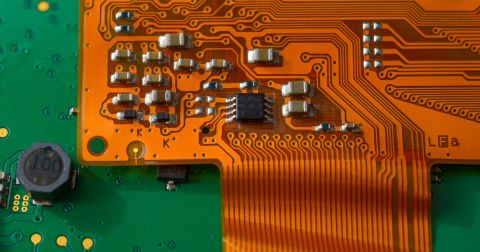
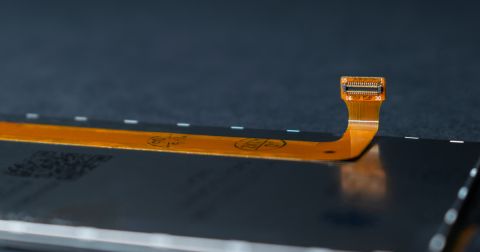

Termination Methods for Flexible Circuits: A Guide for PCB Designers

At a Glance
Discover termination methods for flexible circuits, including ZIF connectors, flex fingers, and crimped connectors. Ensure durability and performance.


Flexible circuits are a game-changer for modern electronics, offering unmatched versatility in compact and lightweight designs. While they share many similarities with rigid PCBs, flexible circuits bring unique challenges and opportunities, particularly in how connections are terminated. From traditional connectors to methods designed specifically for flex circuits, understanding the options available is key for ensuring durability and performance.
This blog will explore termination methods tailored for flexible circuits, focusing on Zero Insertion Force (ZIF) connectors, unsupported flex fingers, and crimped or displacement connectors. Each approach offers specific benefits, and the right choice depends on your application's needs.
Versatility of Flexible Circuit Connections
Flexible circuits can accommodate a wide range of connectors, including standard through-hole or surface-mount types, circular or D-Sub connectors, and pin-and-socket configurations. These options allow designers to carry over many practices from rigid PCB design. However, flexible circuits often require additional considerations, such as supporting the connector areas with stiffeners to prevent stress-induced damage.
Because connectors are often heavier and more rigid than the flexible material they attach to, neglecting to reinforce these areas can lead to cracked conductors or delamination. Incorporating stiffeners to provide stability and distribute stress evenly is a critical step in ensuring the long-term reliability of flexible circuits.
Zero Insertion Force (ZIF) Connectors
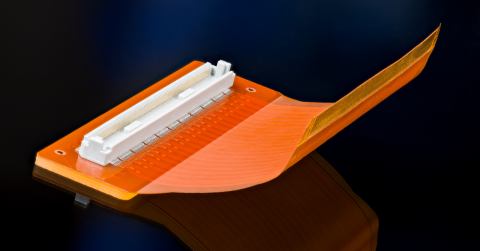
ZIF connectors are a favored solution for applications that require frequent assembly and disassembly. These connectors provide a secure, repeatable connection without causing significant wear on the copper conductors. They achieve this through mechanical latches that hold the flex circuit in place, eliminating the need for excessive force during insertion and removal.
Benefits of ZIF Connectors
- Durability: Minimal mechanical stress on copper traces ensures a longer lifespan.
- Compact Design: Eliminates the need for additional mating connectors, reducing both size and cost.
- Ease of Use: Ideal for applications requiring frequent re-connections.
Design Tips for ZIF Connections
- Thickness Matters: The mating area of a ZIF connector typically requires a thickness of 0.012" ± 0.002". Flexible circuits may require a polyimide stiffener in the termination zone to achieve this specification. To prevent stress at the stiffener's edge, ensure an overlap of at least 0.030" with the coverlay material.
- Precision Is Key: The outline of the flexible circuit for ZIF connections often demands a high level of precision, with tolerances as tight as ±0.0002". This precision may necessitate advanced manufacturing techniques such as laser cutting or high-accuracy tooling.
- Surface Finish: If the application involves frequent insertions, select a durable plating material. Thin surface finishes may degrade over time, potentially exposing the underlying metal.
ZIF connectors are an excellent choice for applications where reliability, compactness, and frequent connectivity are required.
Unsupported Flex Fingers
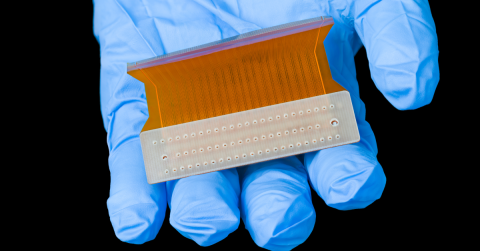
For a versatile and adaptable connection method, unsupported flex fingers stand out. These are essentially exposed extensions of the circuit's conductors, free from the encapsulation of base or coverlay materials. Accessible from both sides, these "floating" conductors can be directly connected to other PCBs or components, making them a flexible option for unique configurations.
Advantages of Flex Fingers
- Customization: Adaptable to specific pitches, lengths, and layouts.
- Flexibility: Allows for direct connections without requiring additional connectors.
- Dual Accessibility: Exposed conductors are accessible from both sides.
Design Guidelines
- Thicker Conductors for Durability: The fingered region is often designed to have thicker copper conductors, typically 0.010", while the rest of the flex circuit may feature thinner conductors to maintain flexibility.
- Laser Forming: The free-floating nature of flex fingers is achieved through laser ablation, which precisely removes surrounding material on three sides of each conductor. This customization allows the fingers to meet exact specifications but adds to the overall cost.
- Preventing Damage: Flex fingers are vulnerable to damage during handling and assembly. To mitigate this, designers often include a bus bar, a temporary connection that aligns and supports the fingers until the final assembly is complete.
While more complex and potentially costlier than other methods, unsupported flex fingers offer a lot of flexibility for custom applications.
Crimped or Displacement Connectors
Crimped connectors provide a robust and economical solution for establishing secure connections in flexible circuits. This method involves mechanically piercing the flex circuit to wrap a contact around the conductor, ensuring a reliable electrical and mechanical bond. Crimped connectors are available in standard male and female configurations and can be housed for additional protection.

Why Choose Crimped Connectors?
- Durability: Creates a strong connection resistant to mechanical stress.
- Cost-Effective: A practical option for high-volume or budget-conscious designs.
- Ease of Integration: Standard pitches and configurations make them compatible with a wide range of applications.
Design Considerations
- Housing Options: Centerline housings can encapsulate the crimped contacts, providing added support and protection.
- Customization: Although less customizable than unsupported fingers, crimped connectors meet most standard application requirements, particularly in size and pitch.
- Versatility: Suitable for applications requiring robust connections with minimal assembly complexity.
Crimped connectors offer a straightforward solution for achieving secure, cost-efficient terminations.
Supporting Termination Areas: The Role of Stiffeners
For all termination methods discussed, one common design consideration is the addition of stiffeners. These elements provide mechanical reinforcement in areas where connectors or terminations are applied, ensuring that stress from weight, movement, or assembly does not compromise the flexible circuit.
Best Practices for Stiffeners
- Use compatible materials, such as polyimide or FR4, to match the circuit's thermal and mechanical properties.
- Overlap stiffeners and coverlay materials to reduce stress concentration points.
- Ensure that stiffeners do not interfere with the circuit's natural flexibility outside the reinforced area.
Proper use of stiffeners can significantly enhance the durability and reliability of flexible circuits, regardless of the termination method.
Conclusion
Flexible circuits offer innovative solutions for compact and lightweight designs, but choosing the right termination method is critical to achieving performance and reliability. ZIF connectors are perfect for high-precision applications requiring frequent reassembly, while unsupported flex fingers provide unparalleled adaptability for custom layouts. For straightforward, cost-effective solutions, crimped connectors are a reliable choice.

关于作者
Related Technical Documentation
相关资源
目录
- Versatility of Flexible Circuit Connections
- Zero Insertion Force (ZIF) Connectors
- Benefits of ZIF Connectors
- Design Tips for ZIF Connections
- Unsupported Flex Fingers
- Advantages of Flex Fingers
- Design Guidelines
- Crimped or Displacement Connectors
- Why Choose Crimped Connectors?
- Design Considerations
- Supporting Termination Areas: The Role of Stiffeners
- Best Practices for Stiffeners
- Conclusion
Solutions for Every Role and Team
- Discover and evaluate design options earlier
- Develop in one shared workspace
- Scale with control and compliance
- Connect every stage of hardware development
Learn More
Thank you, you are now subscribed to updates.




 沪公网安备 31010502006411号