



When Should You Use Flexible Printed Circuit Cables?

At a Glance
The two predominant reasons for using flex or rigid flex, are to solve a packaging issue or reduce the space and weight of the electronics package. These two are often interrelated and space, weight and packaging, (SWaP) will continue to be a driving force in PCB design.


A common question when it comes to PCB design is “When should I use a flex circuit?” That question could be coming from someone using a wire and cable solution or someone using rigid PCB materials or even someone brand new to PCB design. In a previous blog, we went through the advantages of using flexible printed circuit cables:
- Solves a packaging issue
- Reducing space and weight needed
- Reduced assembly costs
- Facilitates dynamic flexing
- Thermal management
- Improves product aesthetics
- Bio-compatibility
- Increased reliability and decreased opportunity for operator error
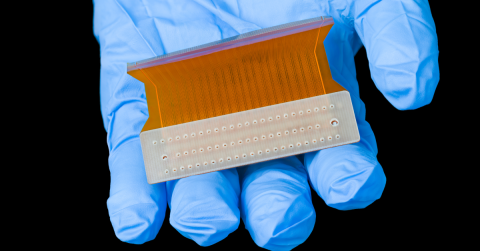
While there are many reasons to move to flex or rigid-flex circuit construction, the two predominant reasons are to solve a packaging issue or reduce the space and weight of the electronics package, which are often interrelated. Space, Weight, and Packaging, (SWaP) will continue to be a driving force in flexible PCB cable design. Flex and rigid-flex construction can eliminate bulky, and heavy, wire and solder connections, often saving 60% or more in weight and space while reducing overall package size. It is not hard to imagine a thin, sleek, flex circuit as a benefit to this constraint.
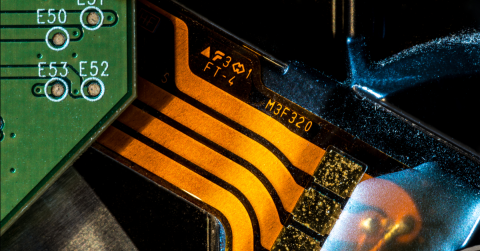
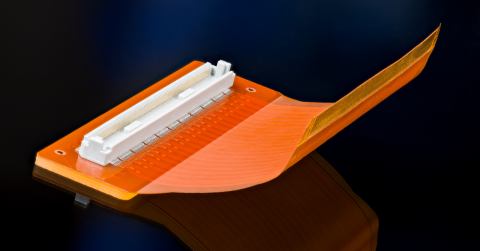
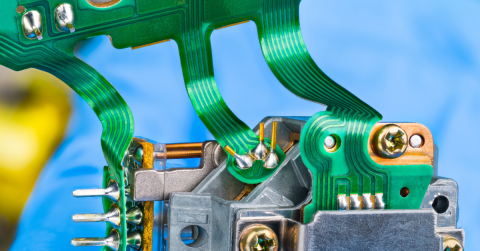
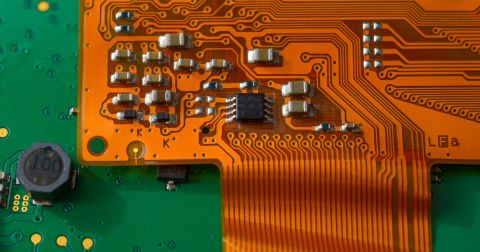
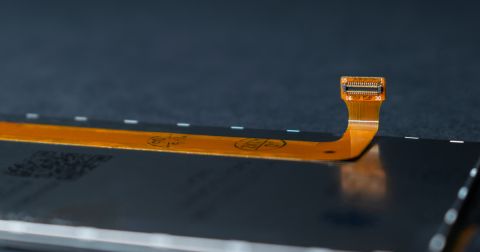
Flexible circuit cable materials are also designed to be bent, folded, and flexed. This allows a designer to place electronic components and other functional elements in the optimal position within the electronics system and use the flex circuit or rigid-flex construction to provide 3 axis connection, with no discrete pieces. This is where a PCB designer’s imagination becomes critically important. Flex can be manufactured in nearly any shape, bent and folded around corners, and designed to move up and over a feature in the electronics system while reducing weight and space.
One of my favorite things to do is to work with designers and engineers who are considering using flex or rigid-flex circuits for their applications. As the saying goes, a picture is worth a thousand words and I would claim that the same concept can be applied to flexible printed circuit cables. Because a designer’s imagination drives so many of the “perfect” flex applications, flex samples often trigger creative ideas. “Oh! I think something like this could solve the problem we are working on!” is a common statement. Also, the moment when you see someone’s eyes light up with an idea, and know that something interesting is about to come from the discussion. Some of the common things that spur these ideas are uniquely shaped flex tails, splitting into different directions, (who knew you could do that?) circuits bent into three-dimensional shapes, and densely routed rigid flex with tails significantly reducing the space needed in packaging.
I thought it would be interesting to finish this blog with different examples of applications that have used flex circuits and rigid-flex to solve packaging issues and reduce space and weight in the hope that they spur some creative thoughts of ways that flex could be used in an upcoming application.
I often lead a presentation on flex circuit design with a story of a law enforcement search and rescue, trying to locate a small girl who had run into a tall, dense, cornfield. The tools they utilized that evening included the GPS from the tractor that had planted the field, drones to fly above the fields, helicopters with infrared imaging for a broader perspective, and all communicating via 800 megahertz radios or cell phones. The reason I use that example is that ALL of those tools being deployed contain flex or rigid-flex within the electronics system. It is easy to imagine how flex was beneficial to weight, space, and packaging in those applications.
Wearables are another easy way to imagine an application for flexible circuit cable materials. That could be something being worn on clothing, used for fitness tracking, or a wearable medical application. Again, it is easy to understand how a flexible printed circuit cable is a perfect fit for products that are going to be worn on the body, providing lighter weight and the ability to absorb movement in a way that wire and cable or rigid-flex cable boards are not able to.
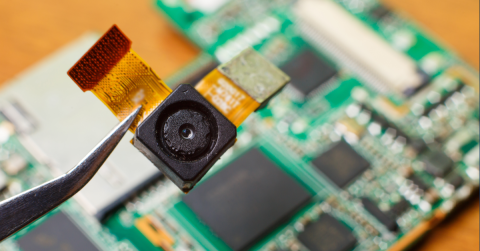
Handheld applications are another great example. Today’s smartphones contain some of the most complex rigid-flex cable constructions that I have seen and yet those are packaged into something that we are all able to easily carry around in our pockets. That would not be possible without lightweight, flexible materials aiding in weight and packaging.
Another application area in which flex is critical is in the automotive industry. Not only is weight the enemy of fuel economy but today’s vehicles contain more electronics than we have ever seen and that trend is expected to continue. Sensors, navigation systems, and connecting ABS and airbag sensors, are just a few of the flexible printed circuit cable applications in vehicles.
To answer that original question, “When should I use a flex circuit”, there are obvious answers such as when trying to fit more complex electronics in a smaller package, when the ability to connect in 3 dimensions is critical, and when weight is a concern. These are all common challenges a PCB designer faces. My challenge to you here is to stop for a few minutes, engage your imagination, and think of ways that flexible materials could solve your next design challenge.
Would you like to find out more about how Altium can help you with your next PCB design? Talk to an expert at Altium.

关于作者
Related Technical Documentation
相关资源
Solutions for Every Role and Team
- Discover and evaluate design options earlier
- Develop in one shared workspace
- Scale with control and compliance
- Connect every stage of hardware development
Learn More
Thank you, you are now subscribed to updates.








 沪公网安备 31010502006411号